Live is a low-power, photocatalytic water purification tank designed for off-grid communities, refugee camps, schools and health centers — delivering safe drinking water without relying on large-scale infrastructure or chlorine. And we'll tell you, up front, the water it can't treat.
What can be purified, and to what quality, depends on the source water. It cannot treat seawater, high salinity, or heavy metals (that's the domain of RO). It is not a medical device.
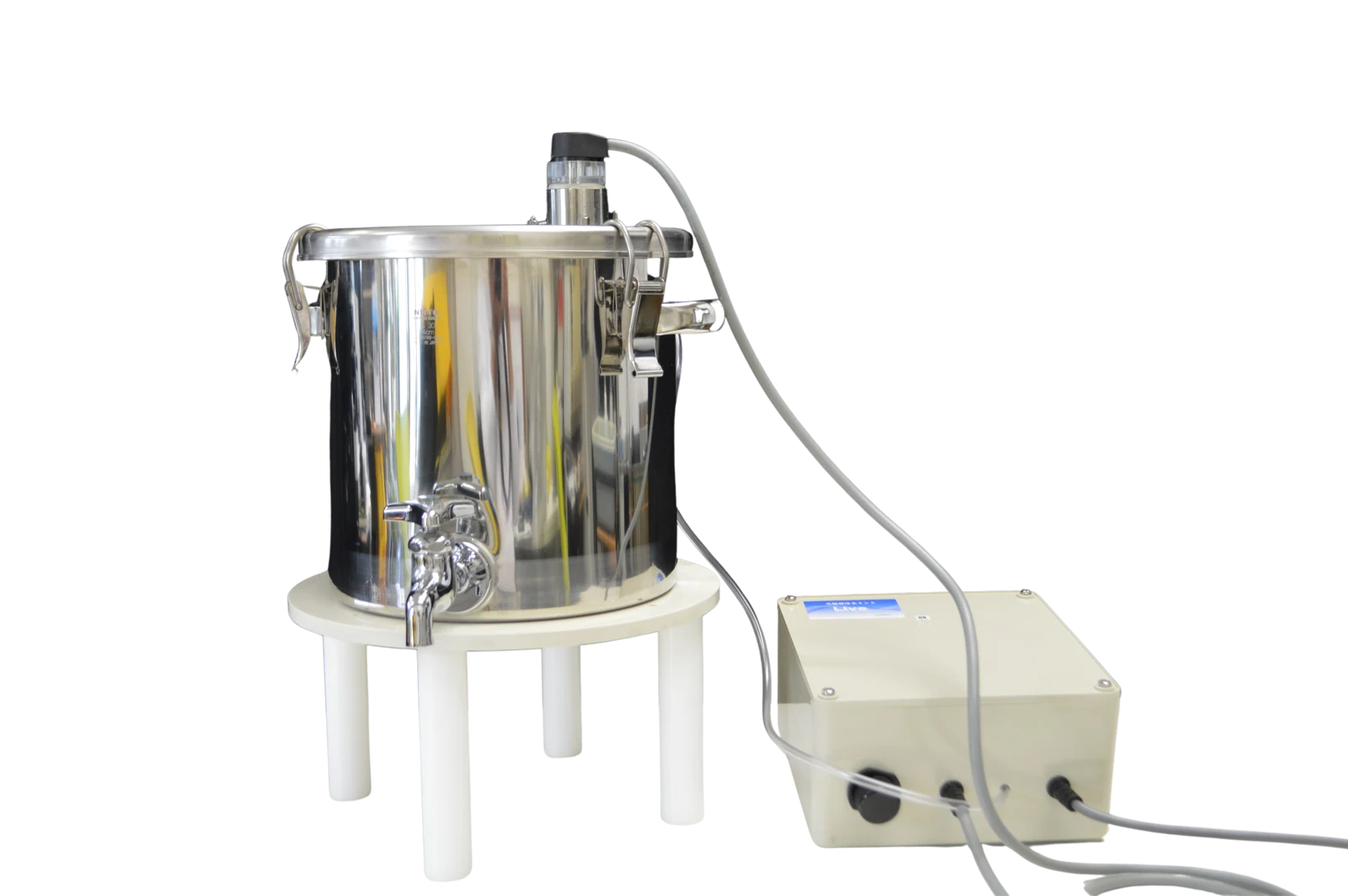
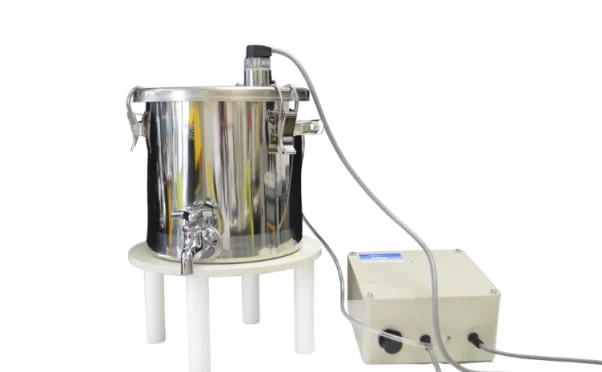
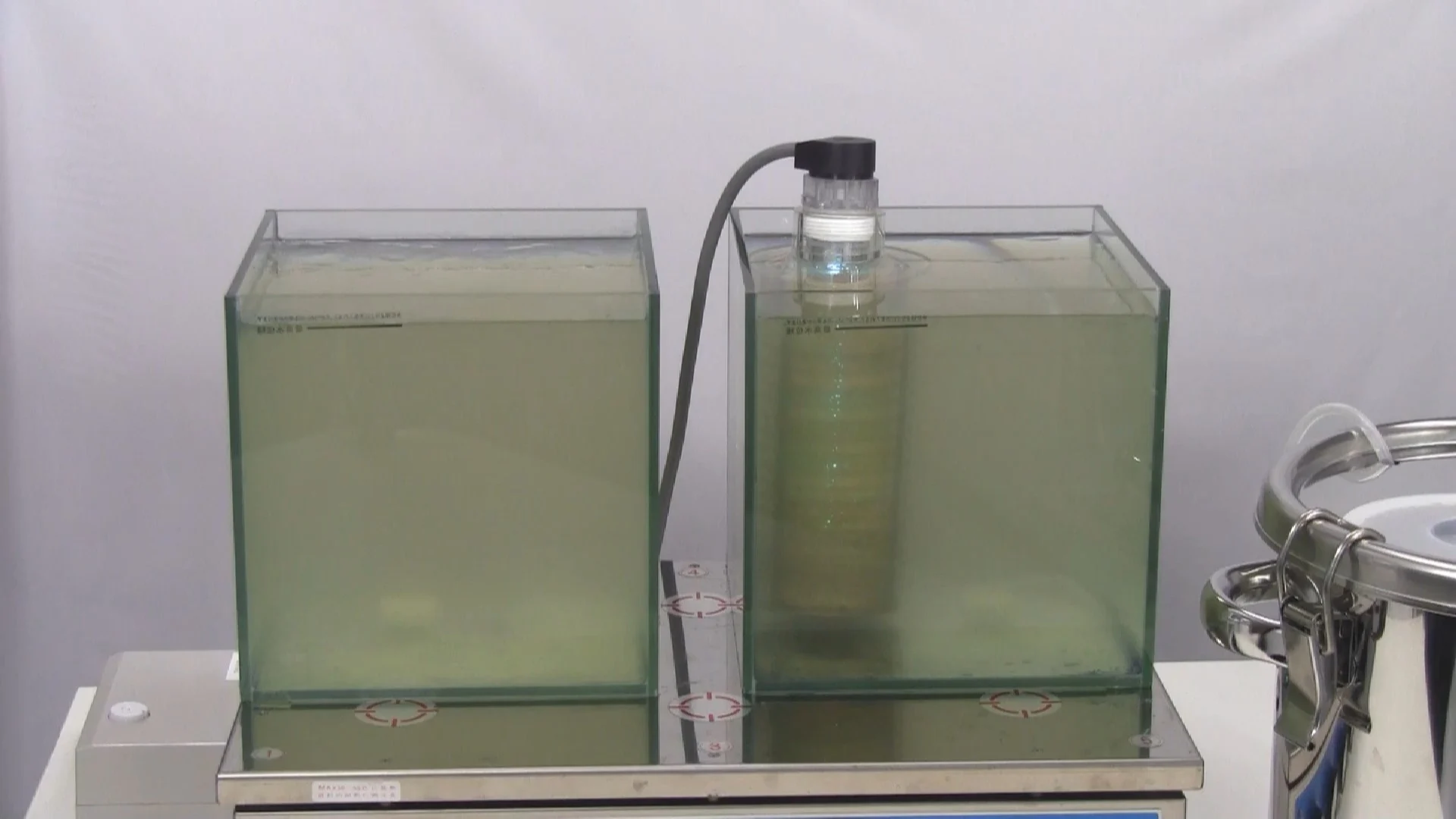
Live photocatalytic purification tankPHOTO 01 / Product (10L type)
Home & disaster readiness (illustration)PHOTO 03 / illustrative
Illustrative image
Water supply at schools & shelters (illustration)PHOTO 04 / illustrative
Illustrative image
01 / 042 photographs + 2 illustrative images
No chlorinePhotocatalyst × UV-C — no chemicals
Off-grid20Wsolar & battery compatible (100L)
Water qualityRiver water that failed on bacteria passed all 13 parameters after 12 h (Japan's drinking-water standards)
Cost≈$0.006per person·day — device cost only, at full use
Third-party testedUbe Environmental Technology Center (registered testing institution No. 68)
01
Who we work with
Safe water is a shared project. Here's how we partner.
For NGOs & Humanitarian Agencies
A bridging solution you can deploy now.
For WASH and health programs in places where large-scale systems will take years — rural communities beyond piped networks, refugee and IDP camps, and areas with a high diarrheal-disease burden.
Pilot design support: site selection, baseline surveys, and a monitoring & evaluation framework
Training & manuals: visual, step-by-step materials for community operators, in local languages
Home use in Japan: the 10L type remains available for household disaster readiness — see the Japanese page.
02
The challenge
The global safe water gap.
Access
One in four people still lacks safely managed drinking water.
According to the WHO/UNICEF Joint Monitoring Programme (JMP), Progress on household drinking water, sanitation and hygiene 2000–2024, 2.1 billion people worldwide still lack access to safely managed drinking water. More than 100 million rely on untreated surface water from lakes, rivers and canals.
2.1BPeople without safely managed drinking water — one in four globally (WHO/UNICEF Joint Monitoring Programme, 2000–2024 report).
Health
Unsafe water still costs more than a million lives every year.
WHO estimates that unsafe water, inadequate sanitation and poor hygiene (WASH) cause more than 1.4 million preventable deaths every year — with young children hit hardest. Effective WASH systems can control waterborne diseases such as cholera, typhoid, rotavirus infection and hepatitis A.
1.4M+Preventable deaths each year attributed to unsafe water, sanitation and hygiene (WHO estimate).
Large-scale water infrastructure is essential — but it takes time and resources.
Many low- and middle-income countries face severe constraints in financing, building and maintaining large water systems. Millions of people will remain exposed to unsafe water for years, even as long-term systems are planned. That is why practical, field-level solutions are urgently needed as a bridging option for vulnerable communities.
SDG 3 Good Health and Well-Being — by reducing waterborne diseaseSDG 6 Clean Water and Sanitation — by expanding access to safe drinking water in underserved areas
03
Our solution
Live — a field-deployable photocatalytic purification tank, in two sizes.
Live is a plug-and-play, on-site purification system: photocatalyst-coated porous ceramic modules and UV-C (deep ultraviolet) light remove bacteria, viruses and organic contaminants from contaminated surface water or microbiologically unsafe groundwater. Minimal electricity, no chlorine chemicals — simpler operations, lower recurring costs. Full price and specs up front — and we'll tell you first what it can't treat.
For Communities — water points, schools, health facilities, camps
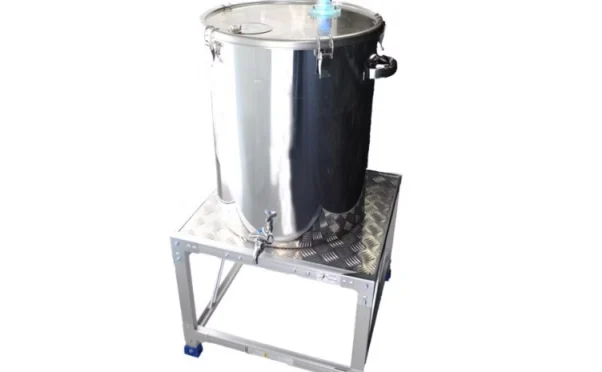
Live 100L typeModel LI-W-100
Actual photo
For community water points, schools, health facilities, and IDP / refugee camps. Facility-scale drinking water that draws on nearby sources such as rivers, ponds and stored water.
For Households & Small Clinics — testing / demonstration units
Live 10L typeModel LI-W-10
Actual photo
For households, small clinics, and testing or demonstration units. At 4kg it's easy to carry, and plugs into a standard Japanese outlet (AC100V); other grid voltages need a transformer.
Both models run on solar generators and portable batteries, or a vehicle's 12V socket via a converterTank, porous ceramic and photocatalyst coating comply with Japan's Food Sanitation ActTurbid or muddy water is pre-treated with the included Bacillus subtilis (natto-derived) coagulant — no clogging*Indicative only, based on an exchange rate of ¥159 = US$1
04
How it works
The work is done by UV-C and a photocatalyst.
Without chlorine, ozone, or other chemicals, it acts on bacteria, viruses, protozoa and parasites, and decomposes many organic compounds including agricultural chemicals. Stirring and aeration are there to help the reaction along. Below, we separate what we have tested ourselves from what rests on the established behavior of UV-C.
Rather than disinfecting with chemicals, it breaks contaminants down with a light-driven reaction. So the minerals stay in the water.
Where RO (reverse osmosis) filters everything out, Live breaks down only what's harmful. That makes its strengths and limits clear — seawater and heavy metals are RO's domain; Live's ground is freshwater, where bacteria, viruses, and organic matter are the problem.
UV-C (germicidal light) × photocatalytic reaction
Built around the patented "BP Eraser" technology inside the tank (Japan Patent No. 6357712). Our own testing covers coliform-group bacteria (see 05 Evidence & safety). For chlorine-resistant protozoa such as Cryptosporidium, and for viruses, UV-C's effect is well established — it destroys DNA and RNA directly, which is why UV-C is also used to sterilize cleanrooms and cleanbenches, not only water. Combined with the photocatalyst, the effect goes beyond disinfection: because bacteria and viruses are organic matter, they're broken down rather than merely inactivated (the same reaction that clears phytoplankton — a slightly larger organism — from the water, which is part of why treated water turns visibly clear). This describes the general, well-established behavior of UV-C and photocatalysis — we have not run our own virus or protozoa tests on the Live unit itself, and we say so rather than imply we have.
No chemicals · minerals retained
No chlorine or ozone. Unlike RO, it doesn't strip out the good components in the water — a key difference.
Stirring & aeration (support)
Keeps the water circulating so it stays exposed to the light. Not the star of the reaction — it helps it proceed.
Simple structure — field-ready
A tank with integrated photocatalyst / UV-C modules: robust in the field, maintainable with basic training, and less dependent on specialist spare parts or high-skill technicians.
STEP 01
SourceSOURCE
Draw bath, pool, river, pond, or stored freshwater into the tank.
STEP 02
Pre-treatPRE-TREAT
Strongly turbid water is settled first with the included natto-based coagulant. Designed not to clog.
STEP 03
UV-C × photocatalystCORE
The light-driven reaction breaks down bacteria, viruses, and organic matter. Stirring and aeration move it along.
STEP 04
Treated waterRESULT
In our testing, river water of Japan's environmental class A — which had failed the bacterial standards as drawn — passed all 13 drinking-water parameters after 12 hours (see 05). Results depend on the source water.
Rough purification time
Clean source (≈ env. class AA–B)approx. 2–12 hours
Heavily polluted source (≈ env. class C)approx. 24 hours
Varies with the source water, temperature, and volume. "Class AA–B / C" are Japan's environmental water-quality classes for rivers — broadly, AA–B means a low organic load. At deployment, we recommend verifying with your actual source.
Where RO takes over — we won't pretend it's universal
Seawater / high salinity & heavy metalsRO's domain
Presenting it as a device that works on any water would, we believe, undermine trust in the technology. We deliver it honestly, to the sites where it's strong.
This section explains the approach to treatment; it is not a guarantee of results. Whether purification is possible, and the resulting water quality, depend on the source water. We make no assertions such as "completely safe" or "prevents all infectious diseases."
05
Evidence & safety
Tested performance — and the water, 24 hours later.
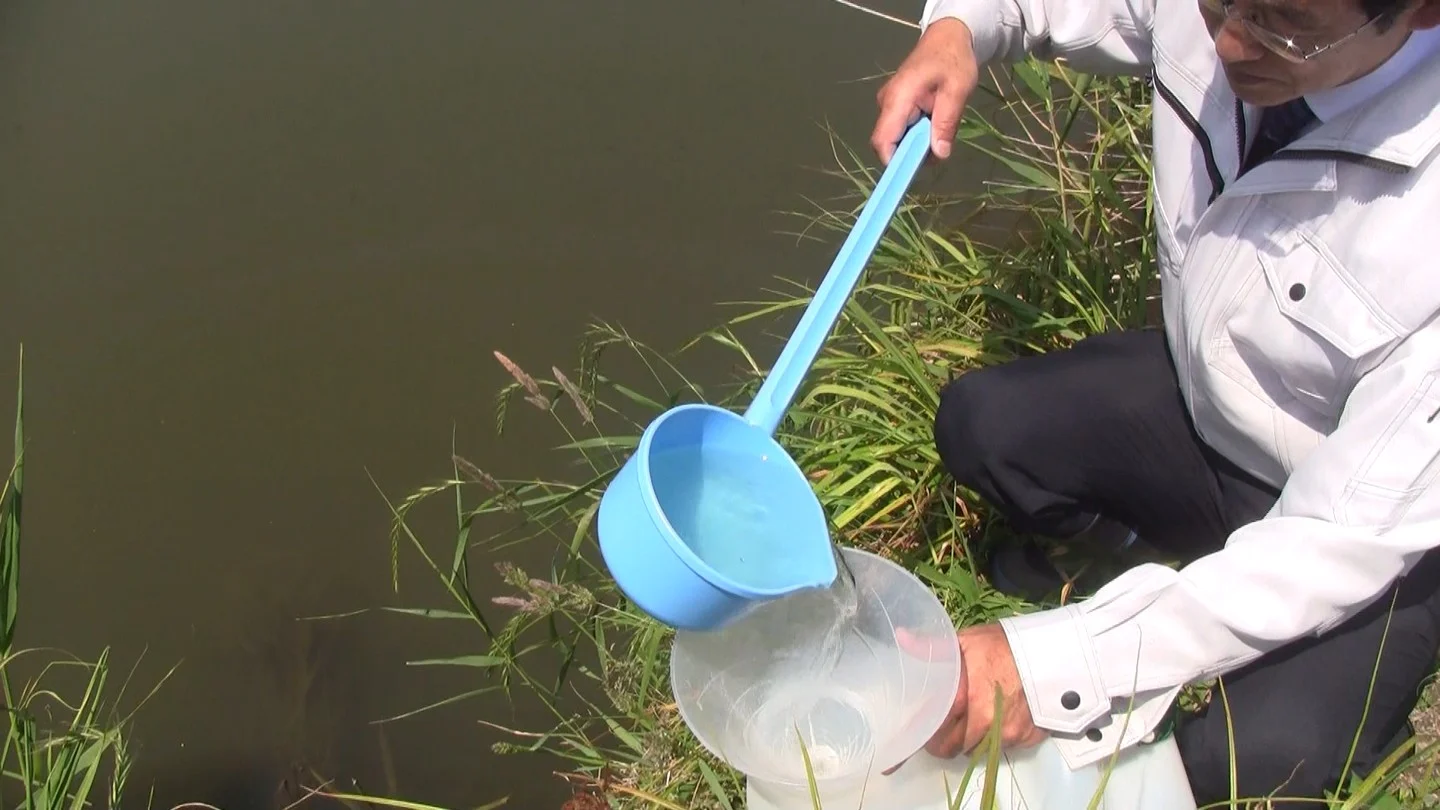
First, a record of our own trial at a pond in Minami-ku, Fukuoka — drag the handle to compare the water at the start and after 24 hours. Below it, four test records you can verify.
24 hours laterAt the start
Pond purification trial (Minami-ku, Fukuoka — in-house) — left: 24 hours after treatment began / right: at the start. Note: this is a record of our own trial, shown separately from deployment results. Our product has so far been deployed in fields where water-quality management matters, such as land-based aquaculture.
Source water carrying coliform-group bacteria at 665,000 MPN/mL — an extreme load — treated in the Live 100L tank at full volume. Measured kill rate: 99.998% after 2 hours (≈4.7-log reduction), rising to 99.999% at 4 and 6 hours (≈5-log). The untreated control showed no reduction. Tested by Kagawa Gakuen Ube Environmental Technology Center (registered testing institution No. 68).
Pesticide degradation test
Simazine 0.95 → 0.05 mg/L in 12 h earlier-generation unit
Simazine (a herbicide) and formaldehyde in 200L of water, circulated at 8 L/min under artificial light alone. Simazine fell from 0.95 to about 0.05 mg/L by 12 hours and to about 0.01 mg/L by 48 hours; formaldehyde fell from 1.2 to about 0.07 mg/L by 48 hours. Both left a small measurable residual — neither reached zero. Blank controls showed no reduction. Tested by Dojindo Group / Dojin Global. Note: this test used an earlier-generation photocatalytic unit, not the current BP Eraser — it demonstrates that photocatalysis degrades these compounds, and is not a performance figure for the current product.
Photocatalytic activity (benchmark)
Methylene blue (10 mg/L) absorbance 1.8 → 0.1
A standard hard-to-degrade dye used in JIS testing, treated in a 7L tank with the BP Eraser (short type). Absorbance fell from about 1.8 to 0.1 over two days, while the control held steady — a benchmark of photocatalytic activity rather than a drinking-water result.
River-water quality test
Raw water: failed After 12 h: passed
River water drawn from the Sabagawa (Shinbashi, class A river) on 1 Sep 2025 and re-tested after 12 hours of treatment. Raw water failed on two counts — 750 CFU/mL general bacteria (limit 100) and E. coli detected (limit: none detectable). Treated water passed all 13 parameters: general bacteria 0, E. coli not detected, turbidity 1.3 → 0.4, color 3.3 → below 0.5. Assessed against Japan's drinking-water standards (MHLW Ordinance No. 101 of 2003), by the method prescribed in MHLW Notification No. 261 of 2003. Tested by Kagawa Gakuen Ube Environmental Technology Center (water-testing body registered with the Ministers of Land, Infrastructure, Transport and Tourism and of the Environment, No. 68 — oversight of drinking-water testing bodies moved from the Ministry of Health, Labour and Welfare to these two ministries in FY2024). Certificate No. 250337 / 250339. See the certificates (PDF) →
On video
We drank the river water.
When the tap stops, can the water from a nearby river become drinking water? Here's what happened when we tried it, on site, with the Live photocatalytic purification tank.
Chikugo River (Kurume)
Homan River (Chikushino)
How photocatalysis works
Field demo (English narration)
Note: playing these videos loads the YouTube player
06
Use cases & limitations
Where Live works best — and where additional treatment is needed.
We don't claim "any water becomes drinkable." Every technology has ground where it’s strong — and work that’s better left to others. We disclose, up front, the boundaries you need to judge whether to deploy it.
Effective use cases
Strongest where microbial contamination is the primary risk
Surface water — rivers, lakes, ponds and irrigation canals where the main contamination is fecal bacteria (indicated by E. coli and the coliform group).
Shallow groundwater — wells where bacterial contamination is suspected.
Institutional settings — schools, clinics, small health posts, community water points.
With UV-C × photocatalyst and no added chemicals, it acts on bacteria, viruses, protozoa and parasites, and decomposes many organic compounds including agricultural chemicals. Third-party tested on Live: coliform-group bacteria (99.998% at 2 h) and river water that passed all 13 drinking-water parameters after 12 h. Tested on an earlier-generation unit, not Live: simazine and formaldehyde degradation. Not yet tested on Live: protozoa and viruses — for those we rely on the established behavior of UV-C (see 04).
No chlorine or ozone, so no by-products such as trihalomethanes form. Turbid water is pre-treated with the included Bacillus subtilis (natto-derived) coagulant — it isn't a filter, so it doesn't clog.
Low power at 13W / 20W. Solar, battery, or local grid with a transformer.
Where caution or additional treatment is needed
What it cannot do — told up front
Not suited to seawater or high-salinity water. Desalination is the domain of RO (reverse osmosis).
It cannot remove heavy metals — such as arsenic, lead or cadmium in groundwater. For such sources, we'll point you to RO or another suitable technology.
It can't treat PFAS (per- and polyfluoroalkyl substances). Sources where PFAS is suspected need separate, dedicated treatment.
Long-term chemical pollution — industrial wastewater, persistent organic pollutants, or heavy pesticide loads — needs dedicated assessment and treatment.
Cyanobacteria blooms. Lakes and reservoirs with serious toxin-producing algal blooms require caution and further treatment.
It can't treat environmental class C water. Water unfit as a tap-water source (class C) can't be made drinkable by this device either — we recommend river water of class AA–B. (These are Japan's environmental water-quality classes for rivers; broadly, AA–B means a low organic load. Outside Japan, send us your source-water analysis and we'll assess it.)
It is not classified as a medical device. Its effectiveness as a measure against waterborne infectious disease is why we are advancing proposals to relevant organizations.
Before any deployment: assess the source water.
We strongly recommend a pre-project water-quality assessment — and, where needed, combining Live with coagulation–sedimentation, filtration (for particulates and metals), or an alternative source. Where contamination is extreme, even for organics, treatment may take longer than the standard cycle. We'll help you judge suitability before purchase, free of charge — and if it isn't suitable, we'll say so. Ask if it fits — free →
Risk management & community communication.
In case of equipment failure or power outages, we advise partners to provide alternative measures (such as boiling) and to build risk communication into community training — so users know what to do if the system is temporarily unavailable.
07
Pilot projects
A bridging solution for high-risk communities.
Live is built for the years before large-scale, government-led water systems arrive — and for places where conflict and displacement make permanent infrastructure difficult. Typical settings: rural communities beyond existing piped networks, refugee and IDP camps, and schools, clinics and community water points with a high diarrheal-disease burden.
Example pilot design
Live 100L × 30 sites — schools, health centers, community water points
Disinfection cycleapprox. 2 h / 100 L (bacterial risk reduction)
Daily operation10 h/day → 5 cycles → 500 L/day per tank
Drinking water requirement2 L / person / day
People served per tank250 people / day
Total reach (30 tanks)7,500 people / day
Proposed duration2 years
These figures assume a 2-hour cycle on a clean source (class AA–B) — the fastest end of the range in 04. On a heavily polluted source the cycle can run to approx. 24 hours, which reduces reach to roughly 40–80 people per tank per day. We size every pilot against the actual source water. Sites would be selected jointly with an implementing partner.
Monitoring & evaluation
Evidence that supports scale-up decisions
Baseline survey — existing water sources and usage, diarrheal-disease incidence (health-center records, school absenteeism), and time spent collecting water per household.
Monitoring at 1 and 2 years — changes in disease rates, school attendance and clinic visits, time saved fetching water, system uptime and user satisfaction.
Cost-effectiveness analysis — cost per person compared with water trucking, bottled-water distribution, and other point-of-use interventions.
Nature Co., Ltd.
Equipment & technical backstopping
Supply of equipment, on-site installation support, and maintenance training for local operators.
Local community / school committee
Daily operation
Filling, switching, cleaning, basic routine maintenance — and user education on safe water practices.
Local NGO / implementation partner
Mobilization & WASH education
Community mobilization, hygiene promotion, and support for user training and behavior change.
Our first feasibility study of this model is underway — in Uganda.
In June 2026, our feasibility study of a pay-per-use safe drinking-water supply system in Uganda, based on this photocatalytic technology, was selected for a subsidy program of Japan's Ministry of Economy, Trade and Industry (METI). Read the announcement →
08
Cost & impact
Low lifecycle cost, high impact.
The numbers below are the 100L model at full utilization — device cost, running cost, and what that means per person served. Actual costs vary with local energy prices and labor.
UV-C lamp≈ 4,000 h life → every 1.2–1.5 years (≈ ¥20,000)
Glow lamp / air pump≈ ¥500 / ≈ ¥5,000
*Indicative only, based on an exchange rate of ¥159 = US$1. Electricity cost depends on the local tariff and can be reduced with solar systems.
Cost per person served
Assuming 5 years of full utilization
Capacity500 L / day (5 × 100L cycles over 10 h)
People served250 people / day (2 L each)
Operating days320 days / year → 80,000 person-days / year
Device cost over 5 years≈ USD 452 / year
Per person, per day≈ USD 0.006 (≈ ¥0.89) — device cost only
Device cost only, and assuming a 2-hour cycle on a clean source — electricity or the solar kit, the UV-C lamp, the air pump, coagulant, freight, import duty and local labor come on top. Against bottled water at USD 0.8–2 per person per day, Live is far cheaper at full utilization; against point-of-use chlorination it is not always cheaper per person-year, and we'll say so — Live's case is that it needs no chlorine resupply chain and leaves the minerals in the water.
The long-run goal: local water businesses.
We aim to support local entrepreneurs and community groups to operate Live units as sustainable micro water businesses — charging affordable user fees that cover maintenance and replacement parts, and generating local employment in installation, operation and small repairs. We're committed to partnering with NGOs, governments and companies to build that capacity.
09
Implementation
Simple operation, local ownership.
Live is designed so the people who use it can run it — community water committees, school staff, health-facility staff — with short, hands-on training and manuals made for the field.
Who operates it — and the training
Learned in 1–3 hours of hands-on training
Operators: community water-committee members, school janitors or teachers, health-facility staff.
Manuals: translated into local languages, highly visual, step-by-step. Basic literacy helps but the materials don't assume it.
Core tasks: power on / off, cleaning the tank, and the vinegar soak of the ceramic module.
Maintenance & repair flow
Kept local, by design
Daily: the operator performs routine checks and cleaning.
Malfunction: contact the local NGO partner or a designated distributor / service point (for example, in the capital city).
Spare parts (lamps, pumps): supplied through local partners or distributors.
Solar generators + portable batteries (day and night use)A vehicle's 12V socket via a simple converterConventional grid power where available— suited to off-grid villages, humanitarian settings, and disaster response
UV-C safety and lamp disposal.
UV-C is an eye and skin hazard, so the lamp operates enclosed within the tank. Safety precautions for operators are set out in the instruction manual, which forms part of the handover training. On disposal: spent UV-C lamps must not be discarded with general waste. Where the country of deployment has no suitable processing facility, we will take the lamps back and send them to a licensed processing plant in Japan. Take-back carries a fee, and we recommend budgeting for it in the project's consumables line from the outset.
Storing treated water — this matters, because no disinfectant remains.
Live leaves no chlorine residual, so treated water is not protected against recontamination during collection, transfer and storage. How long it keeps depends on the container and the storage temperature. If the water is moved to another container, sterilize that container with boiling water first, and use the water within a few days. In outbreak or high-risk settings, safe-storage practice — lidded, narrow-necked containers with a tap — should be part of the community training alongside the unit itself.
10
The evidence behind it
Judge us by third-party verdicts, not our words.
We're not a sales company — we're an environmental survey and research company. Judge by the patents, public approvals, and test results.
Patents
4 granted
Water-purification patents
Four granted Japanese patents in water-purification technology, two of them commercialized: No. 6357712 — photocatalytic water purification structure (BP Eraser) No. 5353997 — photocatalytic water purification device No. 4769325 — water-quality improvement device for reservoirs, rivers and lakes No. 4826964 — plankton recovery device verifiable on J-PlatPat
Productized
2 in market
Patents commercialized
Not left in the lab — implemented as the field-ready Live series.
EXPO 2025
Exhibited at Expo 2025 Osaka
We presented the technology at the World Expo.
Procurement status
UNICEF supplier registration — in progress, not yet complete
We have applied for supplier registration and have obtained all three letters of recommendation required for the application. Supplier registration is a procurement listing — it does not constitute UNICEF endorsement or approval of any product. We will update this page when it completes. ● in progress
Fukuoka Pref.
Management Innovation Plan, approved
Approved by the prefecture as a new business plan after review.
Quality
New Product Certification
Holds Fukuoka's New Product Certification.
METI (Japan)
Global South program Uganda FS selected
Selected (results announced June 30, 2026) under METI's FY2025 supplementary-budget "Global South Future-Oriented Co-Creation" subsidy program (small-scale demonstration / feasibility studies): a feasibility study of a pay-per-use safe drinking-water supply system in Uganda. Read the announcement →
Drinking-water suitability testing is carried out by a third-party body.
We publish the results as-is in PDF (see 05 Evidence & safety). Because results depend on the source water, please consult us about your specific source before purchase.
Our deployment record is something we'll build, one site at a time.
The technical foundation — patents, productization, third-party drinking-water testing — is already in place. What comes next is the field: land-based aquaculture, disaster stockpiles, water supply at evacuation shelters. We'll introduce cases honestly, in order, as real permissions and results come in. If you're considering being one of the first sites, we'd be glad to talk.
Representative, Mr. Mikoda (actual photo)
11
About Nature Co., Ltd. — the background
When I was a child, the river near my home was called "the river of death."
— Toru Mikoda, Founder
Our founder, Mikoda, grew up in Omuta, Fukuoka, during Japan's era of industrial pollution — a river where factory effluent had killed off the fish, skies of sulfurous gas, and Minamata disease in the news day after day. His is a generation that learned, first-hand, that "water can break." So he became an environmental-survey researcher, and for more than twenty years, he has surveyed and analyzed water environments and aquatic ecosystems for national and local governments.
This device is not a product dreamed up on a whim. It is his answer to a question he carried for years as a researcher: can broken water be brought back to drinkable water — without chemicals?
Professional Engineer, Japan (Construction Environment)Biological Classification, Grade 1 (aquatic organisms) — Japan national qualificationLicensed diverFounded 2003 (Fukuoka)
"Professional Engineer" and "Biological Classification" are Japanese national qualification systems — the closest Western equivalent is a chartered/licensed engineering or ecology credential.
Every unit sold means a little less undrinkable water somewhere in the world.
In many parts of the world, people still have nothing but unsafe water to drink. We aim to bring this technology first to the places facing waterborne disease and water scarcity — then feed what we learn there back into disaster readiness at home. We actively seek partnerships with NGOs and humanitarian agencies, government ministries and local authorities, and companies pursuing impactful CSR / ESG initiatives.
OUR COMMITMENT
We dedicate part of our profits to addressing unsafe drinking water in developing regions.
This has been our policy since founding. To build a supply path to international agencies, we are advancing UNICEF supplier registration (all three letters of recommendation obtained).
● in progress — UNICEF supplier registration
Field notes
A few things worth knowing about water.
Honest, evidence-minded notes on the water you'll actually be treating — in the field, after a disaster, or where a safe supply can't be taken for granted. We pair every capability with its limit.
Water sources2026.06
Clear water isn't the same as safe water.
Water can look perfectly clear and still carry what you can't see. We split the risk into two kinds — microbial and chemical — and show where each one is, or isn't, our job.
Read more
Source assessment2026.06
Know your source before you trust it.
Before you deploy any treatment, it pays to know what's in the water. A short, practical look at what to check — and how the answer changes the right tool.
Read more
Preparedness2026.06
When the water doesn't come back.
Outages and shortages rarely last just a few hours. Why stored water alone isn't enough for long events — and how nearby freshwater becomes a real option.
Read more
More topics (coming soon)
PFAS
PFAS and groundwater — what the limits mean for the water you can treat.
Coming soon
Field water
Rainwater and stored water: how far can they go?
Coming soon
Water sources2026.064 min read
Clear water isn't the same as safe water.
Water can look perfectly clear and still be unsafe to drink. Clarity only tells you about particles you can see; it says nothing about the bacteria, viruses or dissolved chemicals you can't. In the field, "it looks clean" is one of the easier ways to get caught out.
It helps to split the risk into two kinds.
The first is microbial contamination — E. coli and other coliforms, viruses, protozoa, parasites. Surface and shallow sources are especially exposed: a single rain event upstream can change the result from one day to the next. Where sanitation is strained or animals share the catchment, the risk climbs — and the consequences fall hardest on children and the elderly.
The second is chemical contamination — heavy metals, nitrate, high salinity, and PFAS (per- and polyfluoroalkyl substances). These don't change how the water looks, and they don't respond to the same treatment. Removing them is a different problem, with different equipment.
The practical takeaway is about order: work out which kind you're facing before you decide how to treat it. Testing first — even a basic screen — keeps you from solving the wrong problem.
This is where the photocatalytic purification tank "Live" fits — the microbial side. Using UV-C and a photocatalyst, with no chlorine and no dosing chemicals, it breaks down bacteria, viruses and protozoa in nearby freshwater. There's no filter cartridge to resupply, which matters where logistics are fragile.
We'll be straight about the limits. Heavy metals, nitrate, PFAS and seawater / high-salinity water are out of scope for "Live" — those belong to reverse osmosis or other dedicated treatment. We don't claim that any water becomes drinkable. If you're unsure about a source, tell us before you commit, and we'll say plainly whether this is the right tool.
Background: general guidance from public-health and water authorities on microbial and chemical drinking-water risks, including PFAS regulation (2025–2026). This note is general information; assess any specific source on the basis of an accredited laboratory result.
Source assessment2026.064 min read
Know your source before you trust it.
Before any treatment goes in, it's worth knowing what's actually in the water. A source assessment doesn't have to be elaborate — but skipping it is how programmes end up treating for the wrong thing.
A useful screen covers a few fronts. For microbial safety, indicators like E. coli and total coliforms reveal faecal and general contamination. For physical quality, turbidity tells you how much pre-treatment the water will need. For chemical safety, a screen for nitrate, heavy metals, salinity and — increasingly — PFAS shows whether the source carries risks that simple disinfection won't touch.
Each result points somewhere different. A microbial problem and a turbidity problem are usually solvable on site. A heavy-metal, salinity or PFAS problem usually isn't — it changes the equipment you need, or rules a source out altogether.
Re-test when something changes: a source that's sat idle, flooding or construction nearby, or a shift in taste, colour or smell. The point isn't paperwork. It's to know, before you rely on it, what the water in front of you really is — and to choose accordingly.
When the constraint is microbial load or turbidity, "Live" is a fit. Cloudy water is pre-treated with a coagulant derived from Bacillus subtilis (the natto bacterium) — not a clogging filter — and the UV-C × photocatalyst stage handles pathogens, without chemical dosing.
But if the screen comes back with nitrate, heavy metals, high salinity or PFAS, "Live" is the wrong tool — and we'll tell you so. Those need reverse osmosis or another dedicated process. The honest first step is always the same: test, then match the method to the result.
Background: general practice for source-water assessment — microbial indicators, turbidity, and chemical screening including PFAS (2025–2026). Requirements vary by country and programme; confirm against an accredited laboratory and local standards.
Preparedness2026.064 min read
When the water doesn't come back.
Safe water arriving on demand is a fragile assumption, and it's the first thing to fail in a crisis. Outages and shortages are rarely a matter of a few hours — after a major disaster, supply can be down for weeks or months, and in water-stressed regions the shortage is the baseline, not the exception.
The need is also bigger than drinking water. Cooking, washing, sanitation — daily life takes far more water than people expect. Bottled or trucked supply helps, but for long or remote events the logistics strain quickly, and stockpiles run down.
So the useful question becomes: how do you make use of the water that's already nearby? A river, a pond, a stored or tank source — water you wouldn't normally drink can, with the right treatment, become a drinking-water option.
For field operators and households alike, the calm in a crisis comes from having that option in place beforehand — one more dependable way to reach drinking water that doesn't hinge on the pipes, or the trucks, arriving.
The photocatalytic tank "Live" is built for exactly this. With no dosing chemicals and no filter to replace, it turns nearby freshwater into drinking water on low power — about 13W for the 10-litre unit, 20W for the 100-litre. It sits quietly until it's needed, which is what suits it to prolonged deployments.
The limits, plainly. If the power is out too, you'll need to supply it — there's no generator built in. It can't treat seawater, high-salinity water, or water carrying PFAS or heavy metals. We don't claim that any water becomes drinkable. Tell us the source and the setting, and we'll confirm honestly whether it's a fit before you commit.
Background: general data on prolonged outages after major disasters and on chronic water stress (2024–2025). This note is general information, not a guarantee of performance; treated-water quality depends on the source.
13
FAQ
Clear up your questions before you decide.
Yes. With a transformer it runs on local grid voltages, and because it needs no continuous chemical resupply, it suits regions with fragile logistics. We are advancing UNICEF supplier registration (all three letters of recommendation obtained), English product documentation and a spec sheet are available on request. To start, choose "Aid organization / NGO" on the form.
There are no filter cartridges to replace — it isn't a filter method, so nothing clogs and needs swapping out. The UV-C lamp and photocatalyst are core components with a service life; for current details on parts and maintenance in your specific deployment, please ask us. We'd rather be precise than over-promise.
For shelters and small communities, the 100L type (20W, 16kg) is the right fit. The three things to check are your expected water source, the volume you need, and how you'll supply power. To request a quote or demo, choose "Quote / demo" on the form. We can also provide materials for a deployment plan.
It treats nearby freshwater — bath, pool, river, pond, or stored water. Muddy, turbid water is pre-treated with the included natto-derived coagulant before purification. It is not suited to seawater or high-salinity water, or water containing heavy metals (those are the domain of RO — reverse osmosis), and it can't treat water contaminated with PFAS. If you're unsure about your source, ask us before buying and we'll help you judge.
The 10L type draws 13W — about one LED bulb. It runs from a small portable power station or generator that can supply AC 100V. Consider it alongside your emergency power plan (the product itself has no power-generation function).
It depends on the container and the storage temperature. Because Live leaves no chlorine residual, treated water has no ongoing protection against recontamination. If you transfer it to another container, sterilize that container with boiling water first and use the water within a few days. Where the water is collected, carried and stored by hand, safe-storage practice matters as much as the treatment itself — we'd rather say that plainly than let it go unmentioned.
UV-C is hazardous to eyes and skin, so the lamp sits enclosed inside the tank and operators are not exposed to it in normal use. Handling precautions are set out in the instruction manual, which we cover during handover training. Spent lamps cannot go into general waste: where the country of deployment has no suitable processing facility, we take the lamps back and send them to a licensed plant in Japan. Take-back carries a fee, so we recommend budgeting for it in the consumables line from the start.
We carry out drinking-water suitability testing through a third-party body and publish the results as-is in PDF (see 05 Evidence & safety). In all honesty, though, the resulting water quality depends on the source water. We don't claim "any water will always be drinkable." That's exactly why we recommend checking your source together in a free pre-purchase consultation.
It isn't a small purchase. But because Live isn't a filter-replacement method, running costs stay low after you install it. Together with the value of being prepared — having drinkable water from a nearby source when the tap stops — we'll talk through honestly, in a free pre-purchase consultation, whether it fits your situation.
14
Get in touch
No sales pitch. Start with a simple question: will it work for you?
Depending on the source, it may not be suitable — and if so, we'll say so plainly. No question is too small.